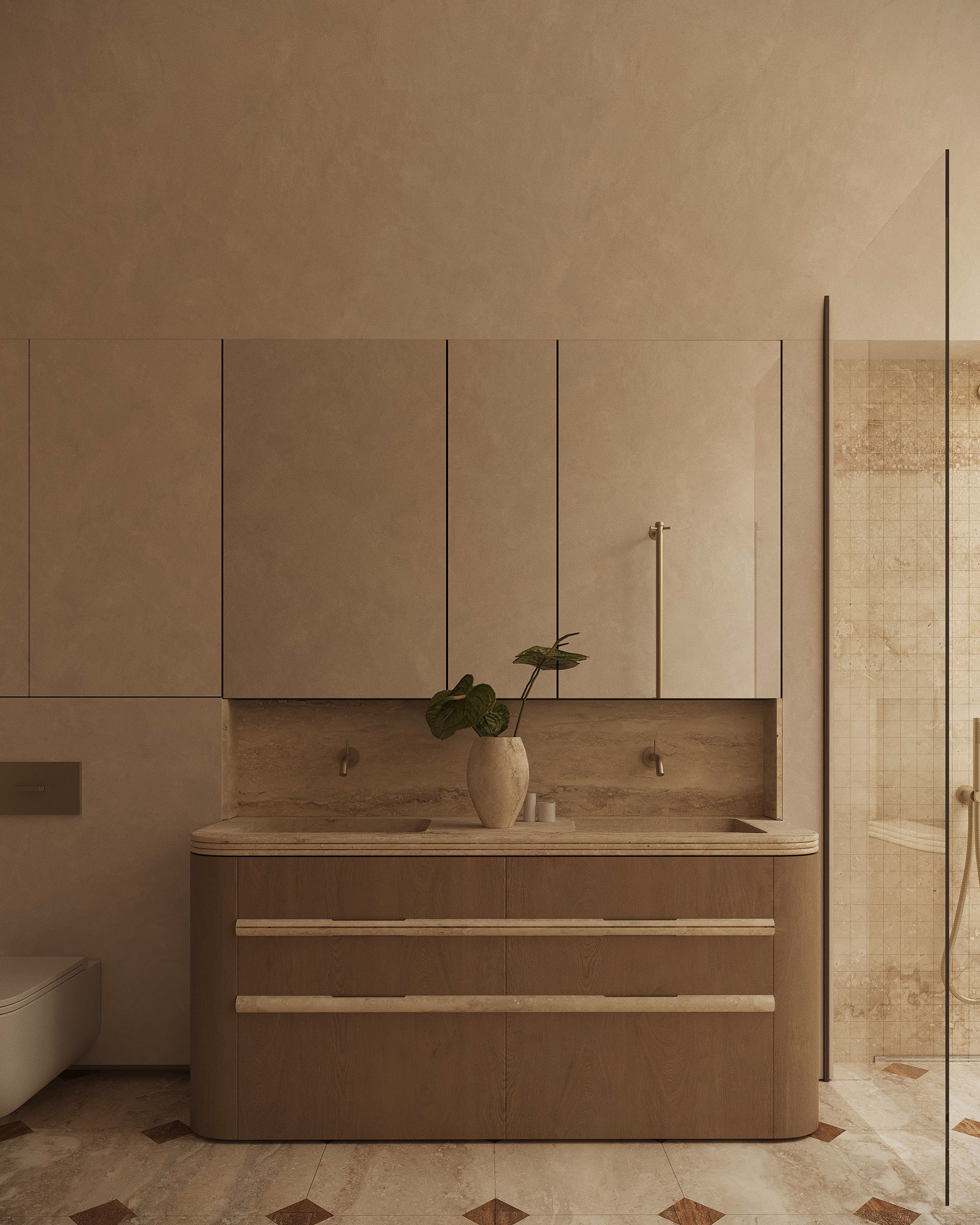
Joshua Tree has a very specific energy and very high standards. This Desert Retreat project was about balance.
The location sets the tone. Raw landscape, strong light, dramatic scale. Our job was not to compete with that, but to create a retreat that feels natural in this context: timeless, calm, and quietly distinctive. The villa is designed as an inward-oriented composition. From the outside, it reads as a restrained, protective volume responding to heat, wind, and privacy. Once inside, the architecture opens gradually — revealing courtyards, framed sky views, and carefully measured transitions between interior and exterior spaces. This sequence allows residents to move from the vast, harsh landscape into a controlled, intimate environment without losing connection to the surroundings.
The inner courtyard serves as the emotional core of the house. Enclosed and private, it provides a controlled outdoor space where water, shade, and sky coexist without exposure. The pool moderates temperature and light, while the fireplace introduces warmth and ritual in the evening, encouraging stillness and shared presence.
Interior spaces are organized around horizontality, mass, and human scale. A low center of gravity and restrained geometry create a sense of stability and physical comfort. The space feels supportive rather than expansive, reducing the psychological pressure often associated with open-plan desert homes. Materials are chosen for their tactile and absorptive qualities. Wood, textiles, and matte surfaces soften light, allowing the interior to function as a calm, continuous environment rather than a collection of visual statements.


Special attention is given to the evening appearance — with thoughtfully designed lighting and accent zones that highlight the architectural form and character of the space.


The main entrance conveys a sense of protection and calm even before entering the house. The arched opening and textured stonework seamlessly connect the architecture with its natural surroundings. On the right side, a waterfall wall creates a unique microclimate at the entrance — the cool presence and motion of water contrast beautifully with the arid desert landscape. Soft lighting enhances the sculptural façade, while the circular skylight adds depth and dynamism through an ever-changing play of light and shadow.


The main façade features a smooth, double-layered form that dynamically wraps around the building’s contour, adding depth and a sense of movement. An accent wall with cacti and soft lighting enhances the desert character of the landscape, enriching the composition with texture and volume in the evening. A covered parking area for additional vehicles complements the enclosed garage, ensuring both functionality and architectural harmony.


The view from inside the house opens onto an intimate courtyard shaped by the U-form of the building.
Arched windows create a seamless connection between the interior and the outdoors, filling the space with soft natural light. At the heart of the courtyard lies a lounge area with a pergola by the pool — a setting where architecture, landscape, and relaxation merge into one harmonious experience.

The organically shaped pool is seamlessly integrated into the landscape, gracefully weaving between the architecture and the surrounding Joshua trees. Its flowing form defines several relaxation areas: a shaded lounge near the jacuzzi by the house, a central sunken seating zone with a fire pit for evening gatherings, and an open sunbathing terrace nestled among rocks and desert vegetation. The overall concept reflects the essence of this location — a connection with nature, tranquility, and a slowed rhythm of life.


The shaded lounge area sits between the interior and exterior, forming a natural transition between the two. A blend of greenery, textured surfaces, and soft furniture shapes a serene, resort-like ambiance. The olive tree introduces a distinct Mediterranean character to the space. In the evening, warm ambient lighting and the glow from the pool transform the atmosphere — from calm relaxation to a subtly festive mood.


This project was developed as a ground-up vacation villa, conceived from the outset as a place for retreat, slow living, and temporary disconnection from the outside world. The architecture and interiors were designed simultaneously, allowing space, light, and material to work as one system rather than as separate layers.
Inside, the villa is intentionally calm and grounded. The interior palette is built around warm natural wood, muted mineral surfaces, and soft textiles that respond to the desert climate by absorbing light rather than reflecting it.

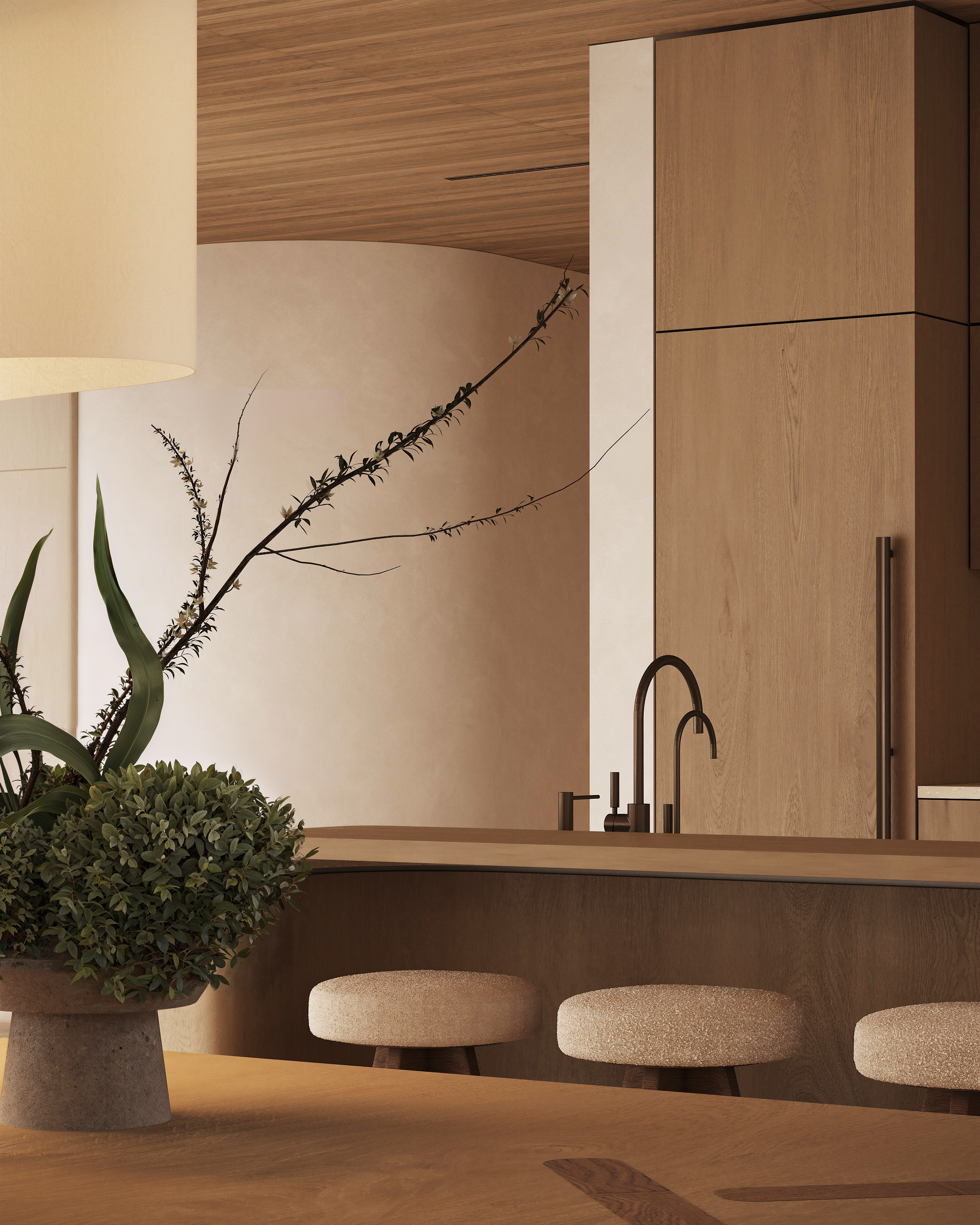
Curved elements and softened transitions are used deliberately to slow movement through the house and create a sense of flow. There are no sharp visual breaks—spaces connect gradually, allowing the interior to feel cohesive and intuitive.


The master suite is conceived as the most private and restorative space of the villa, oriented toward the inner courtyard rather than the open desert. This decision transforms the bedroom into a protected environment — quiet, shaded, and visually contained—while still maintaining a strong connection to nature.